Your clients don’t simply want access to investments. They want the confidence that comes from seeing the entire financial picture
In my previous article, I introduced the four portfolios of wealth management as a practical framework advisors can use to help clients better visualize the true scope of wealth management. Rather than discussing investments, taxes, debt and insurance as separate conversations, the framework helps clients understand that each area is interconnected and that every financial decision influences another.
Consumers don’t hire financial advisors because they know more about mutual funds, ETFs or insurance products. They hire advisors because they want someone who can simplify complexity, connect seemingly unrelated financial decisions and develop strategies that improve long-term outcomes.
The ability to communicate those strategies clearly has become one of the greatest competitive advantages an advisor can possess.
In Peak: Secrets from the New Science of Expertise, psychologist Dr. Anders Ericsson describes how experts develop what he calls “mental representations.” These are internal frameworks that allow them to recognize patterns others cannot see. Experts don’t necessarily possess more information than everyone else; they organize it differently. They see relationships where others see disconnected facts.
The challenge for advisors isn’t simply mastering financial planning. It’s helping clients see wealth management through that same expert lens.
Moving on from the tax planning portfolio, the advisor transitions into the asset management portfolio where they start by discussing strategy rather than recommending products immediately.
Instead of leading with performance, funds or returns, the advisor begins with purpose.
Asset management isn’t simply about building portfolios. It’s about ensuring every dollar has a purpose and every investment strategy supports the client’s broader financial goals.
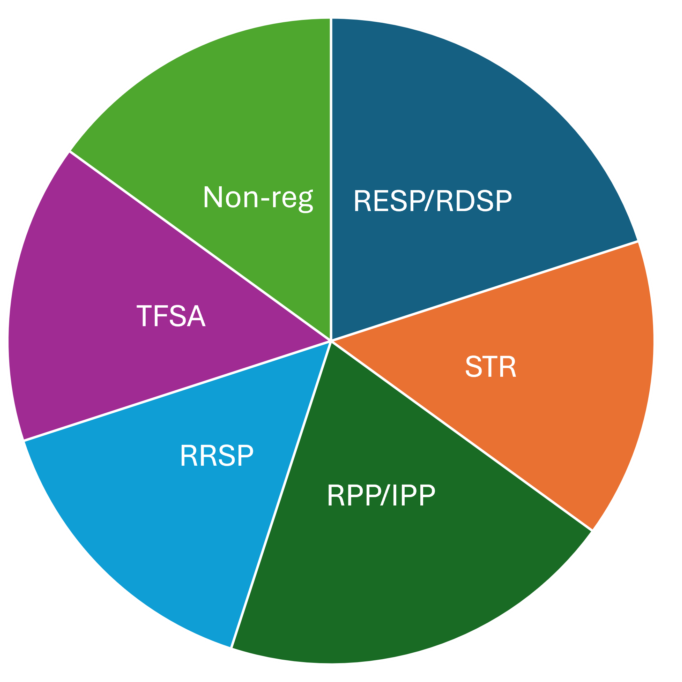
As the advisor sketches the asset management portfolio, they walk the client through six distinct planning strategies, asking thoughtful questions along the way. This is not a checklist presentation; it’s about uncovering opportunities.
1. Short-term reserves
The first strategy isn’t really an investment strategy at all. Every successful long-term financial plan depends on short-term financial stability. Before pursuing growth, families need adequate liquidity to absorb life’s unexpected events without disrupting years of disciplined investing.
Whether that reserve is held in a high-interest savings account, treasury bills or money market investments is less important than ensuring it exists in the first place.
Many clients focus almost exclusively on growing wealth. Great advisors recognize that protecting a long-term investment strategy often begins with something as simple as maintaining sufficient emergency cash.
2. Pension planning
For Canadians fortunate enough to participate in a workplace savings plan, understanding how it integrates with their overall retirement strategy is just as important as the plan itself.
For everyone else, creating their own pension becomes one of the advisor’s greatest responsibilities. With fewer than 40% of working Canadians participating in a registered pension plan, advisors increasingly find themselves designing retirement income strategies that previous generations often received automatically through their employers.
Whether that solution involves a registered pension plan, an individual pension plan or personal retirement savings, the objective remains the same: creating dependable lifetime income.
3. RRSP strategy
The RRSP has served Canadians since 1957 and remains one of the most effective retirement planning tools available.
But sophisticated advisors know the RRSP’s true value isn’t simply the annual tax deduction. It’s understanding when tax deferral creates the greatest lifetime benefit.
Contributions made during high-income years, coordinated withdrawal strategies during retirement, pension income splitting and carefully considered estate taxation all become part of a much broader planning conversation.
Great advisors also help clients recognize potential pitfalls.
Accumulating substantial RRSP assets without a withdrawal strategy may ultimately expose an estate to significant taxation through the deemed disposition rules upon death.
Planning isn’t simply about accumulation. It’s about accumulation, decumulation and ultimately wealth transfer.
4. TFSA strategy
Since its introduction in 2009, the TFSA has become one of Canada’s most flexible wealth-building tools. Yet many Canadians still underestimate its strategic value.
The TFSA isn’t simply an alternative to the RRSP. For many households, it complements RRSP planning by providing tax-free investment growth, tax-free withdrawals and remarkable flexibility during retirement.
Depending on an individual’s marginal tax rates during both accumulation and retirement, the TFSA may produce outcomes that rival or even surpass traditional RRSP strategies.
The advisor’s role isn’t simply recommending one account or another. It’s understanding how both work together over a client’s lifetime.
5. Non-registered investing
Once registered opportunities have been maximized, many clients continue investing through non-registered accounts. This is where strategic tax planning often becomes even more valuable.
Interest income, dividends and capital gains are each taxed differently, creating opportunities to improve after-tax returns through thoughtful investment selection and asset allocation.
Equally important is recognizing that tax-efficient strategies can change over time. For example, eligible dividends may produce attractive tax outcomes during one stage of life while later increasing taxable income through the dividend gross-up mechanism, potentially affecting income-tested government benefits such as Old Age Security.
Exceptional advisors don’t simply understand investments. They understand how investments interact with taxation, retirement income and government programs.
6. Specialized government programs
The asset management portfolio also includes planning opportunities such as RESPs, registered disability savings plans and other government-sponsored savings programs.
While these plans often appear complicated, their benefits can be substantial when properly integrated into an overall financial plan.
Contribution rules, government grants, withdrawal strategies and long-term objectives all require careful coordination. Once again, the advisor’s value isn’t found in opening another account. It’s ensuring every planning opportunity supports the family’s broader financial goals.
Strategy before product
Strategy always comes before product.
Once clients understand why each asset strategy exists, selecting the appropriate investments becomes easier. Products become tools of the strategies; both are there to secure the desired goals.
That distinction fundamentally changes the advisor-client relationship. Instead of being viewed primarily as an investment selector, the advisor becomes a strategic planner who understands how every financial decision affects every other.
Clients begin to appreciate that investment management isn’t an isolated discipline. It’s one-quarter of a much larger wealth management framework that includes tax planning, debt management and risk management. Each portfolio supports the others. None operates independently.
Financial advisors who communicate wealth management through the four portfolios create those same mental representations for their clients. Rather than overwhelming clients with technical explanations or product recommendations, they provide a simple framework that makes sophisticated planning understandable.
Clients rarely remember the names of the investments they purchased. They do remember the moment everything finally made sense.
In today’s increasingly competitive advice marketplace, technical competence is expected. The advisors who stand out are those who can make complex ideas feel simple.
Consumers of financial services don’t simply want access to investments. They want the confidence that comes from working with someone who helps them see the entire financial picture. And that’s exactly what great advisors do.
This article was written by Daniel Collison and first published in Advisor.ca on August 25, 2026